
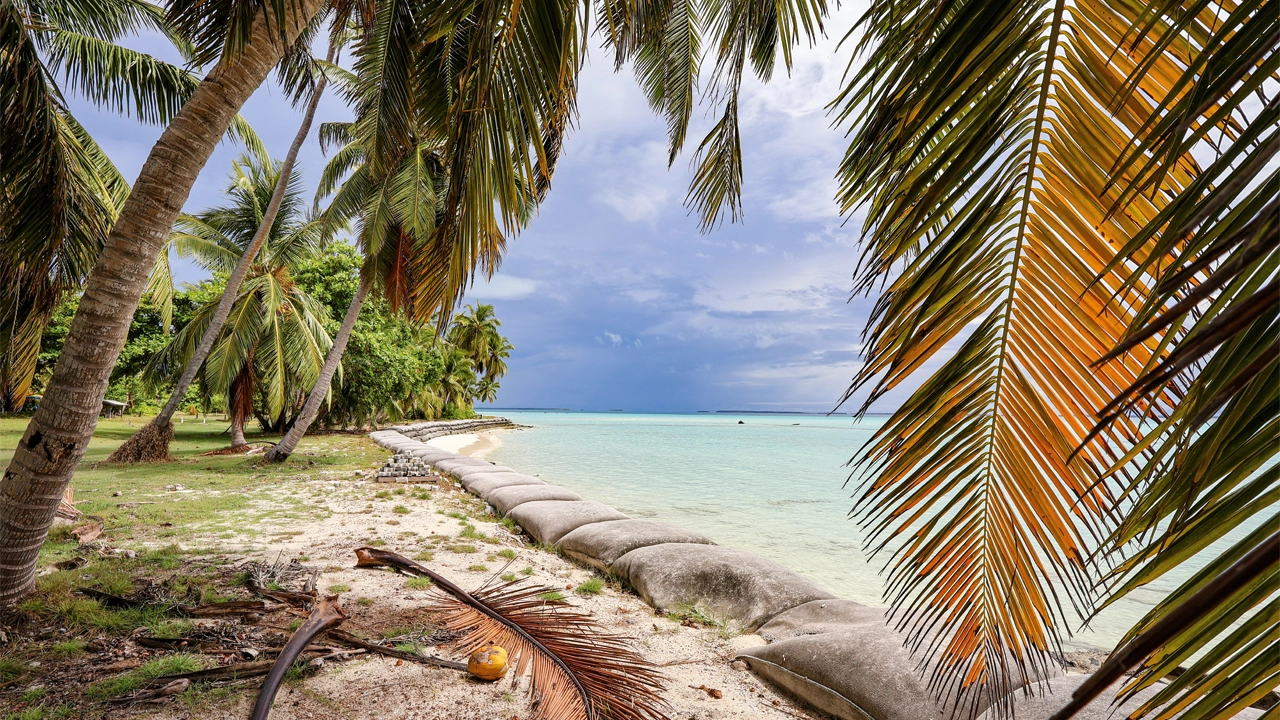
As the remote Cocos (Keeling) Islands community celebrates its bicentenary of settlement, islanders recall its controversial history.
Story + Photos Aleisha Orr
When Abedin Nod cast a vote in 1984, he was one of 261 people to take part in what was described in a law journal at the time as the “smallest act of self-determination ever conducted”. Abedin helped decide the future of his community on an isolated chain of islands off the coast of WA, halfway between Sri Lanka and mainland Australia and closer to Indonesia than either.
Abedin, now 64, was part of a majority that saw the Cocos (Keeling) Islands officially become an external Australian territory in a referendum overseen by the United Nations. He recalls taking the boat ride across the lagoon from Home Island to vote on West Island, even though, he says, they knew very little about the world outside the chain of 27 islands. “When they bring the supply ship between Cocos and Singapore, we thought that it was only Cocos and Singapore – that there is no other – and then, suddenly, people come here after years and then we know Australia, we know the other countries.”
The ballot was one of the defining moments in the remote islands, which this year is marking the bicentenary of settlement. The referendum gave residents a choice between independence, integration with Australia and free association with Australia. They chose integration and the islands have been part of Australia ever since.
Cocos (Keeling) has had a complex and sometimes controversial history. Discovered by British sea captain William Keeling in 1609, the islands remained unsettled for over 200 years. English merchant Alexander Hare saw the unpopulated islands as an opportunity to be taken in 1826, after he was evicted from Borneo, where he led a sovereign kingdom. Basing himself on Home Island, he brought with him about 100 enslaved Malay labourers to work in coconut plantations and process dried coconut flesh known as copra.
But it was another settler, Scotsman John Clunies-Ross, arriving a year later, whose name remains entwined in the ongoing story of the islands.
This story excerpt is from issue #167
Outback Magazine: June/July 2026