
Story Gretel Sneath Photos Ochert Le Roux
A vast swathe of forest green blankets 181,000ha of rich earth straddling SA and Victoria. The south-east corner called the nation’s Green Triangle is home to almost one fifth of Australia’s softwood and hardwood plantations and a $1.5 billion industry boasting 3,000 workers – including Mount Gambier’s Ockert le Roux.
“Some people are born to be farmers; I was born to be a tree farmer,” he says. Ockert started out as a field forester in his native South Africa four decades ago. He found his niche in the commercial landscape, and a flair for negotiating asset sales, new markets and supply agreements brought him to Australia permanently in 2008. “It’s all very analytical and clinical work,” he explains.
Photography is his outlet; a “creative counterbalance” for such high-pressure roles. “We take things for granted and sometimes miss the beauty of where we work; it becomes like white noise,” he says. “Landscapes in particular give you this latitude and freedom – you work with the light and whatever is within the frame, and if you build a story around it, it becomes much more powerful.”
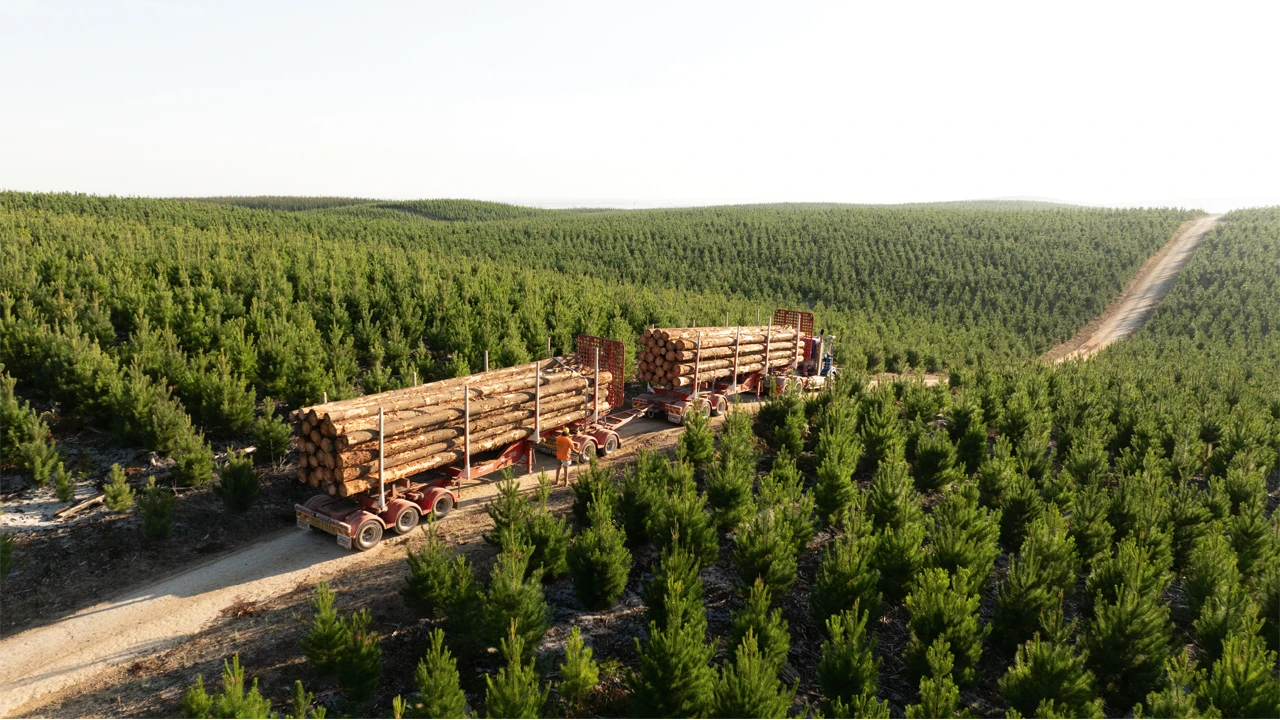
There is a sense of order in uniform rows of Pinus radiata, whether you’re soaring above the forest canopy or watching harvesters slice logs with laser precision. Demand for product is fierce; one in three Australian homes feature structural timber from the Green Triangle. The region also supplies more than half of the nation’s farming fence posts and transmission poles, while millions of tonnes of wood chip is shipped to Japan and China to make packaging.
“You can’t just go out and purchase new land to grow trees as the industry is restricted by water licenses, so we have to increase productivity on every hectare,” Ockert says. “Like livestock breeding programs for superior meat, milk and fibre output, we now have a domesticated tree that has been sent through a very controlled and refined breeding program for a very specific purpose.”
Today’s trees are much straighter than the original pine stock brought out from California well over a century ago. They’re also denser – a bonus for carbon sequestering - and grow 40% faster. “Over three growth cycles, we’ve reduced the rotation to 32 years,” Ockert says. “And it’s perpetual; in some areas, we are seeing the fourth generation of trees. It can go on forever.”
This story excerpt is from issue #168
Outback Magazine: Aug/Sep 2026