
Young Northern Rivers apiarist Frewoini Baume helps tackle global beekeeping issues.
Story + Photos Kate Newsome
Frewoini Baume’s childhood prayers were answered when the swarm arrived. Her mum had collected a bee box from the roadside to be repurposed for an art project – until the unexpected insect tenants took it up. That was 15 years ago and Frewoini, now 25, has been beekeeping ever since.
After finishing high school in 2019, the COVID pandemic hit. She pursued plan bee: an apiarist qualification through Tocal College. This is where her hobby took a professional turn. “I’m grateful to the industry for welcoming and supporting me,” Frewoini says. “People often forget that [bees] are just livestock. It allows them to experience and be with bees in a different way.”
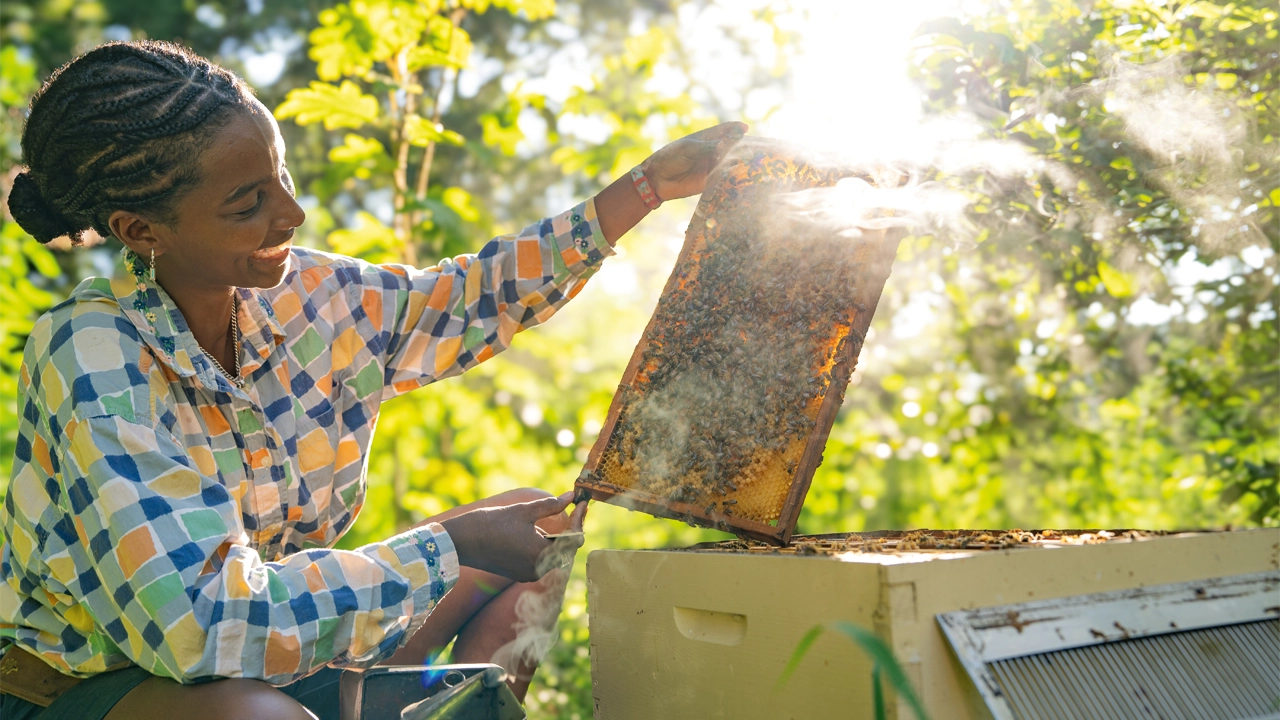
There are still some hives on her home property at Koonorigan, north of Lismore in NSW’s Northern Rivers. Kneeling, Frewoini crunches eucalypt leaves into the chamber of her family’s old smoker. She flicks a lighter and puffs the bellow until smoke blankets the beehive. “Cattle farmers or sheep farmers might have dogs. That’s their way of being able to manage their mobs,” she says, lifting out a frame filled with honeybees, -comb and brood. “For us, the smoke pretty much does the same thing.”
This story excerpt is from issue #167
Outback Magazine: June/July 2026