
Bush Blitz expeditions have documented thousands of Australian species new to western science both outback and offshore.
Story Kate Newsome Photo Sandra McCullough
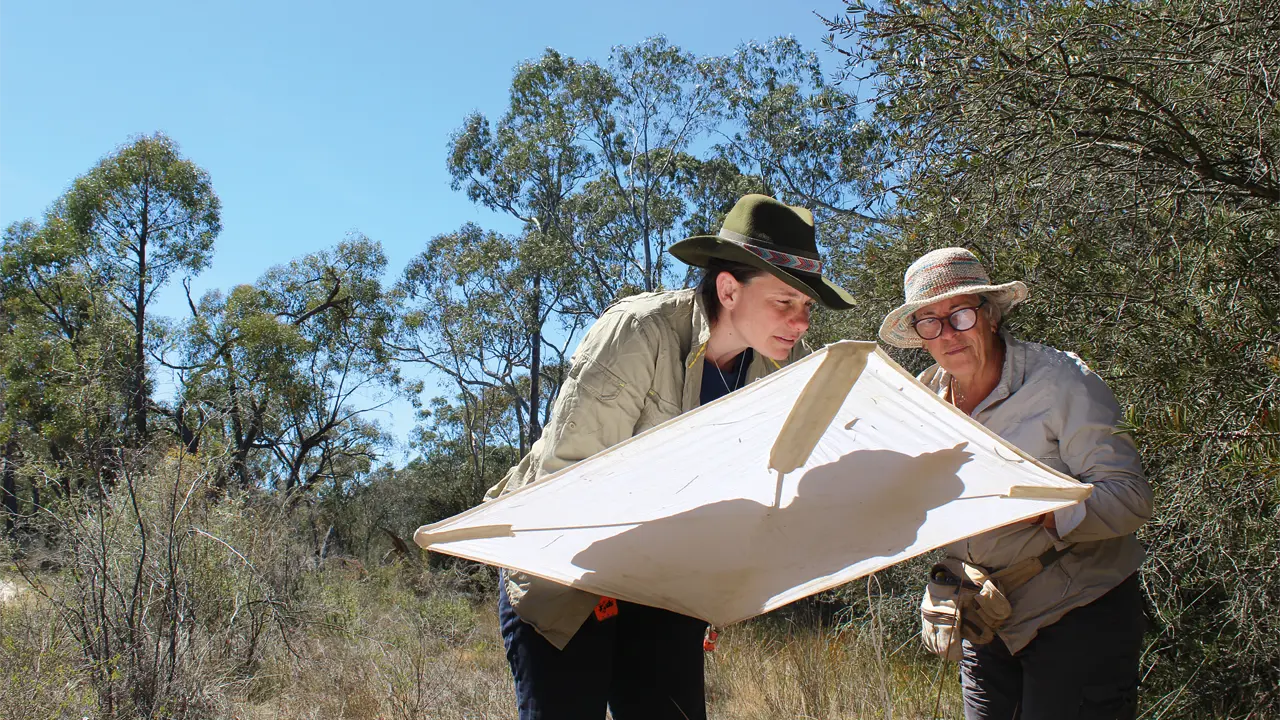
Priscilla stands tall on the truck’s rooftop, racing along. Fabric billows behind and dust lifts off the outback track. Priscilla is the pet name for a gargantuan insect net. The taxonomists figured it would save time to mount the enormous net onto the 4WD – rather than swinging a small version around like a squash racquet – in their hope to catch an undiscovered species.
It is estimated that three-quarters of the country’s species are still to be discovered and described. In marine areas, that pushes up to 90%. Every fortnight-long Bush Blitz expedition to a different region of Australia has one simple goal: survey swiftly to capture a snapshot of biodiversity. After 53 Bush Blitz expeditions, more than 2,262 species new to western science have been found – from new species of mangrove crabs to horned stink bugs, teddy bear bees and the Tjiwarl Trapdoor spider. About one species has been found every 37 hours through Bush Blitz since it was established in 2010 through a multi-million-dollar partnership between the Australian Government, non-profit Earthwatch and mining corporation BHP. It’s a world-first continent-scale survey of plant and animal biodiversity, filling gaps in scientific knowledge and informing practical conservation efforts. Researchers comb through swathes of rainforest, scale snowy mountains, and rappel into deep gorges and boulder fields where life has adapted over millennia, as though on islands isolated by seas of savannah. Each day the taxonomists return to basecamp with the day’s riches. Beneath strung-up lights, they chatter around trestle tables, sinking spiders into soups of ethanol and pinning dragonflies to boards like trays of jewels.
This story excerpt is from issue #165
Outback Magazine: Feb/Mar 2026