
In the Macleay Region, NSW, a Schools Plus initiative in nine schools is improving classroom behaviour and non-attendance rates, and resulting in a calmer teaching environment.
Story Ken Eastwood Photo Crescent Head Public School
At Crescent Head Public School, on the NSW Mid–North Coast, student suspensions and behavioural issues have declined, and attendance rates are on the increase. According to assistant principal Pelay Ingles, it’s due to a program the school started three years ago, with funding and support from the national non-profit organisation Schools Plus.
“We’re using something called the Berry Street Education Model, which is used in education for kids who have trauma in their background,” she says. “The premise is if you make those kids feel safe they’ll be able to learn ... If you settle the 10% of kids with known trauma, that will flow down through the school.”
Every teacher at the school – and now eight other schools in the Macleay Region – have undergone four days of training in techniques that revolve around building relationships with the students, and giving them more responsibility for their own learning and management of behaviours. “It’s very simple, but it’s very effective,” Pelay says. “It’s all about relationships. We’re giving the kids more respect and therefore they’re giving more respect to us.”
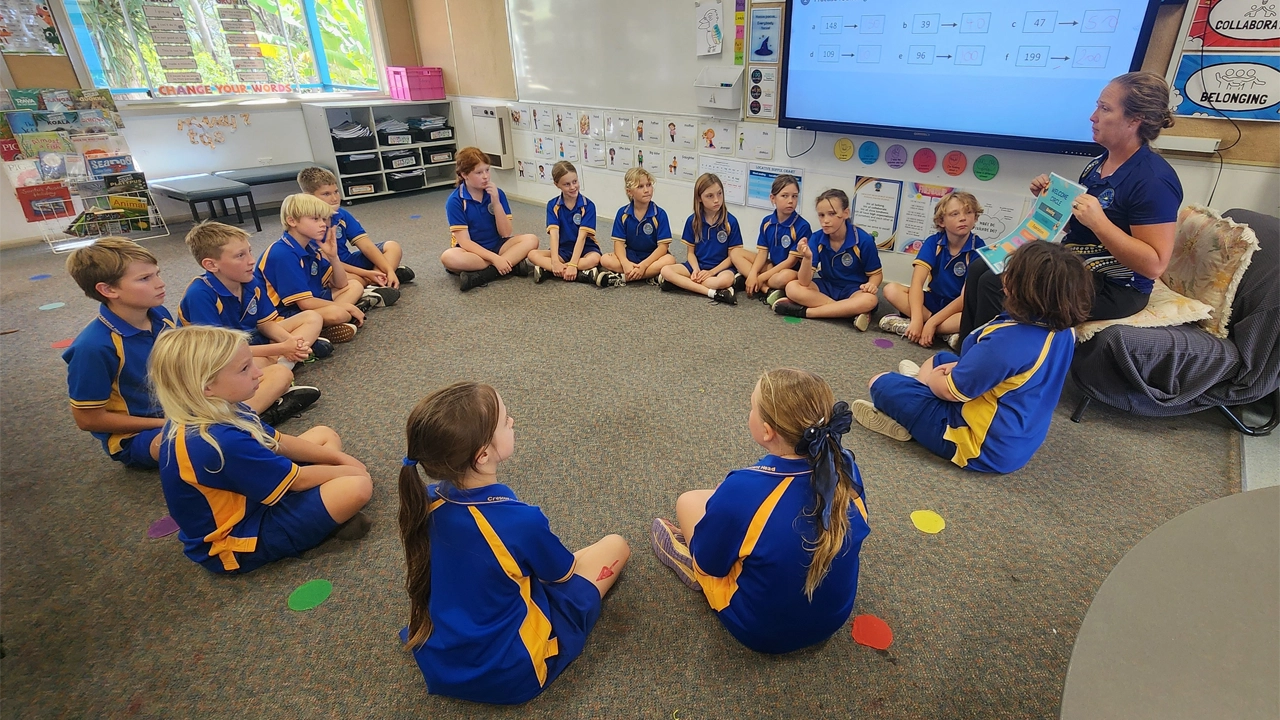
For example, the teachers practise “connection before correction”, making sure they greet a child with their name and have a conversation with them before chastising. “Some kids are not receiving any positive information at home in the morning, so the first time they hear their name in regards to something positive may be that greeting.” In addition, every morning starts with a circle check-in with all the students, with a chance to laugh or hear something positive to start the day. “We used to have a lot of kids turning up late, but they want to get to that morning circle – they want to share,” Pelay says. “Having that connection in the morning really helps. It’s just 10 minutes. That’s all it takes.”
Other simple techniques include regular “brain breaks” if a class is struggling to focus, and allowing each child to place their name on a sliding scale showing how ready they are to learn, giving teachers an instant visual assessment of where the class is at.
This story excerpt is from issue #167
Outback Magazine: June/July 2026