

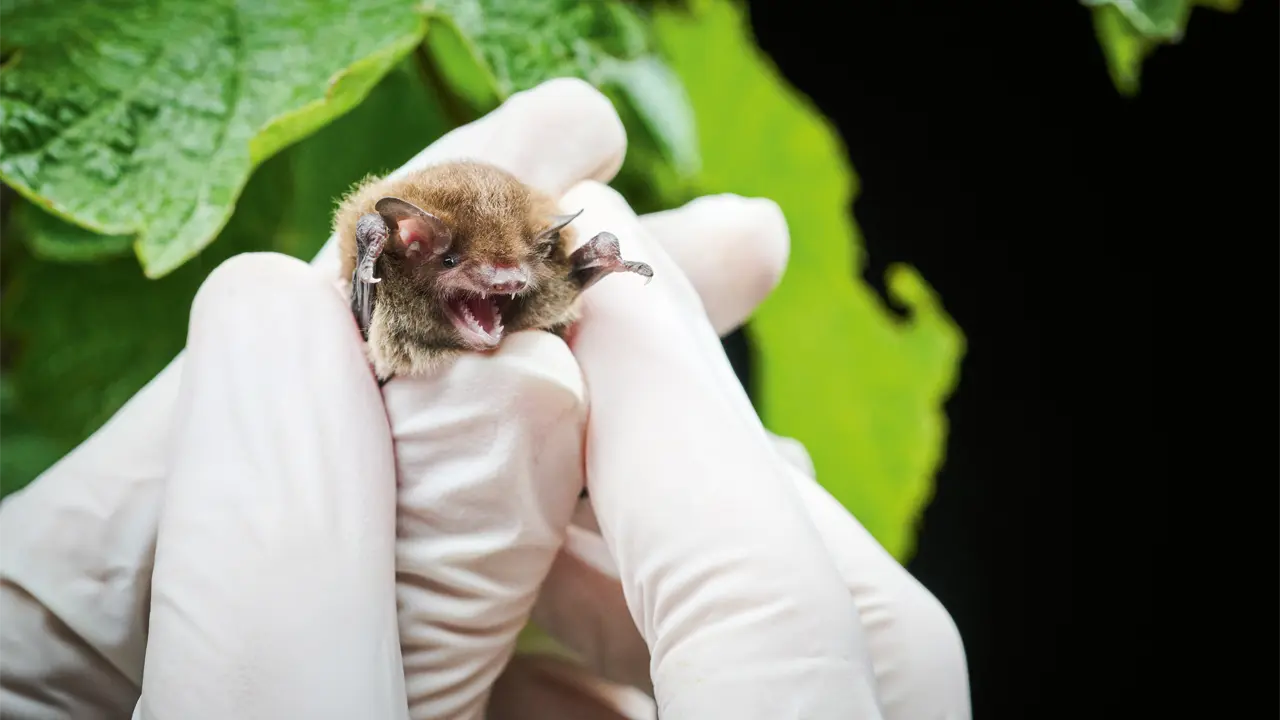
Insectivorous bats could save the Australian wine industry $50 million a year in pesticides if growers help with habitat.
Story Corinna Boldiston Photos Colin Page
Tiny insect-eating bats emerge from their roosts at dusk, spilling from tree hollows, crawling from sloughing bark and dropping from gaps under the eaves of the guest cottage. With lots of woody habitat at Fowles Wine in northern Victoria, there’s an abundance of insectivorous bats – and the micro hunters are a mighty ally in this vineyard’s natural pest control. “They are hunting machines, so why not enlist them as helpers?” asks winery owner Matt Fowles, who partnered with the University of New England on a groundbreaking study on the perfect pairing of bats and wine.
Mostly 5cm long and weighing 3–10g (some up to 60g and 11cm), the mouse-sized bats have a voracious appetite. “They can eat 30–100% of their bodyweight in a night,” says bat researcher Dr Heidi Kolkert. “A common Gould’s wattled bat’s nightly calorific input could be 17 large moths, 276 staphylinid-sized beetles, three flies, nine bugs and a cricket.
Reproductive females eat the equivalent of their entire body mass in one night’s feast, so 100 females can demolish 1kg of moths. That’s a huge service at Fowles, because the top pests in Australian vineyards are the offspring (caterpillars) of light brown apple moths and grapevine moths. “Insectivorous bats are really effective at managing outbreaks of pest insects, particularly of pest moths,” Heidi says. “If there’s a moth eruption, bats will actively target a crop and decimate the outbreak.”
This story excerpt is from issue #163
Outback Magazine: Oct/Nov 2025