
A 270km road trip along Tasmania’s River Derwent reveals a waterway that is vital for tourism, agriculture, recreation and ecological diversity.
Story + Photos Don Fuchs
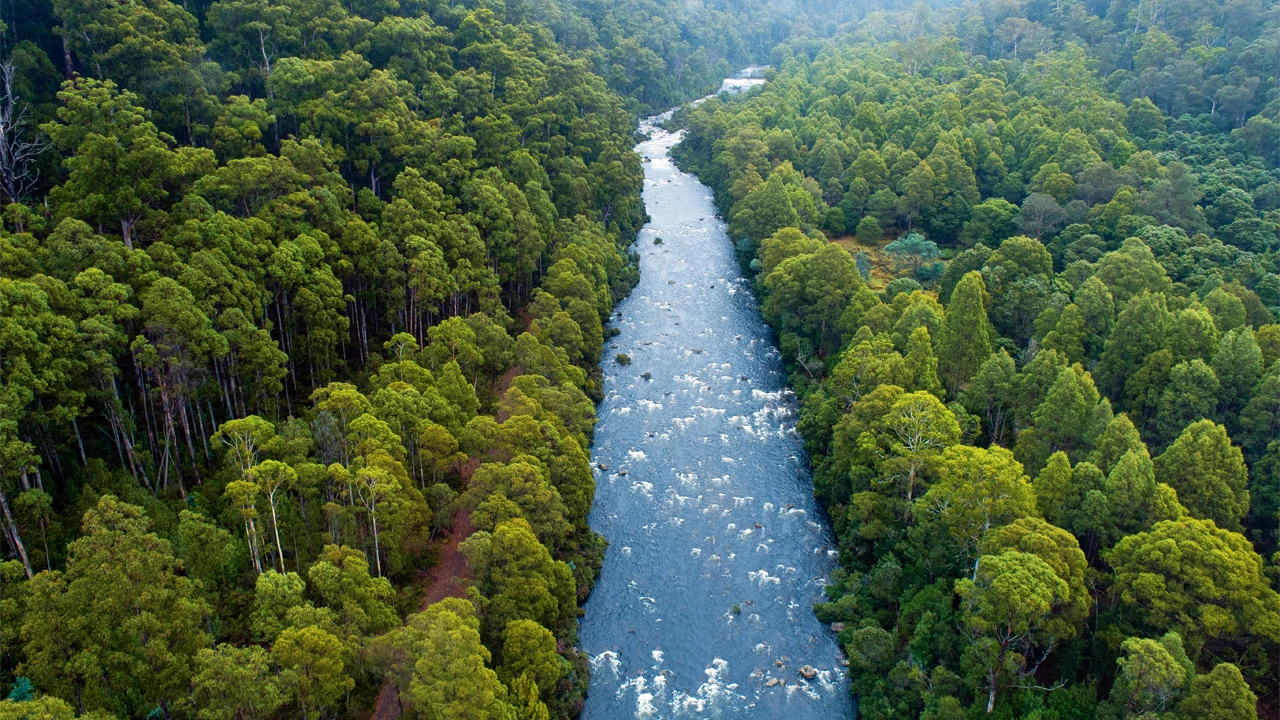
Below the little village of Gretna, the River Derwent alternates between gentle rapids and long stretches of calm, dark waters. With the first tinge of autumn, willows and poplars give it a European feel. “It’s the changes in season. It’s just so beautiful,” enthuses Liam Weaver, owner and head guide of Tassie Bound Adventure Tours.
As an experienced kayaking guide, he takes visitors down the Derwent, coaxes novices through class 2 rapids, interprets the prolific birdlife along the river and surprises visitors with frequent platypus sightings.
At 239km, the River Derwent is the second longest river of the island state. Its journey begins at Lake St Clair in the Central Highlands and, after a descent of more than 700 vertical metres, widens into a tidal estuary near Hobart before emptying into Storm Bay. A relatively short road trip of 270km along the whole waterway has enough attractions to warrant a leisurely time frame of 5–6 days.
Following the young river up in the highlands is a challenge. Its first meandering kilometres are accessible in the World Heritage wilderness of Cradle Mountain Lake St Clair National Park, but shortly after, at Derwent Bridge, this changes when the river enters a wild and rugged landscape. It disappears into dark forests and deep gorges. This is also where several hydro dams hide, including Lake King William and Lake Catagunya.
The picturesque, unsealed back road of the C601 and the Lyell Highway bypass this section of the river and bring travellers down from the Central Highlands to near the town of Ouse, where the River Derwent appears again. Agriculture becomes the dominant feature of its banks, with strikingly green irrigated fields dotting the land left and right. Sheep and Angus cattle populate the paddocks, and various crops flourish, including barley, which is an essential ingredient for whisky produced at the Lawrenny Distillery on the banks of the river just a few kilometres past Ouse.
This story excerpt is from issue #168
Outback Magazine: Aug/Sep 2026