
One of the world’s most remote routes is set to become more accessible.
Story + Photos Georgie Mann
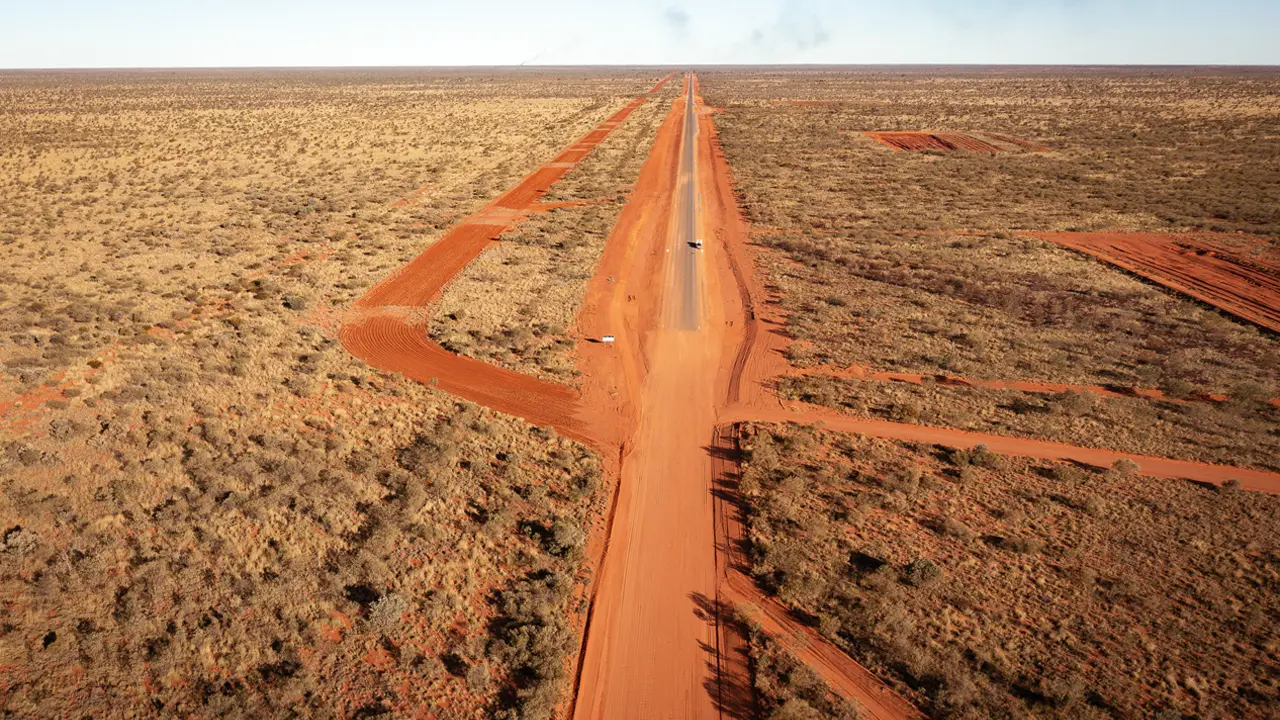
There’s no ceremonial gateway at the beginning of the infamous Tanami Track – no archway or welcome marker announcing the threshold between ordinary travel and outback commitment. A battered “Road Restrictions” sign just north of Alice Springs, quietly signals the start of one of Australia’s most storied inland routes – a north-west traverse through the Tanami Desert and to the Kimberley that carries a reputation far larger than its signposting.
Those who know the track well speak of it not just as a road, but as an experience. “It’s one of the few desert highways where you genuinely feel you’re in the middle of nowhere – some of the most magnificent and changing desert country you can experience,” says David Batty, the cameraman behind the Bush Mechanics television series and a veteran 4WD driver who has traversed the track more than 30 times.
Keri Ross, who grew up along the north of the track and travelled back and forth to boarding school in Adelaide, is also nostalgic: “The Tanami holds really poignant memories for me. It’s wild country, and there’s nothing like rattling down that track with red dust streaming out the back.”
The Tanami’s reputation – punishing, remote, unpredictable – has long outrun its traffic. Stories centre on corrugations, breakdowns, isolation and dust. But for first-time travellers, the greater surprise is how ordinary the beginning feels.
The opening 160km stretch is sealed – smooth enough to soften expectations. The country is open and unremarkable – grassy plains dotted with mulga scrub, bitumen running dark and endlessly ahead. The West MacDonnell Ranges rise to the south in long ochre ridgelines. But nothing yet suggests infamy – just distance.
This story excerpt is from issue #166
Outback Magazine: Apr/May 2026