
From the rainforest to the rangelands, a confluence of weather events has made prime conditions for bird watchers across the country.
Story + Photos Mandy McKeesick
It is a soundscape like no other: a catbird wails like a distraught baby, a wompoo fruit-dove sends out a slow and resonant boom, and somewhere, heard but not seen in the dense rainforest, a noisy pitta wants to “walk to work, walk to work”. Here in the Bulburin National Park, 90km north-east of Monto in Central Queensland, David Legg, binoculars glued to his eyes, is in his element.
David has been a twitcher since the age of 7, when he paid threepence to join the Gould League, named after John Gould, one of Australia’s pioneering ornithologists (issue 161, p76). John and Elizabeth Gould authored and illustrated of The Birds of Australia: in seven volumes, which was published from 1840 to 1848, becoming the first definitive guide to Australian birds. David also cites the Reader’s Digest Complete Book of Australian Birds, “which I have read back to front 100 times”, as an early influence.
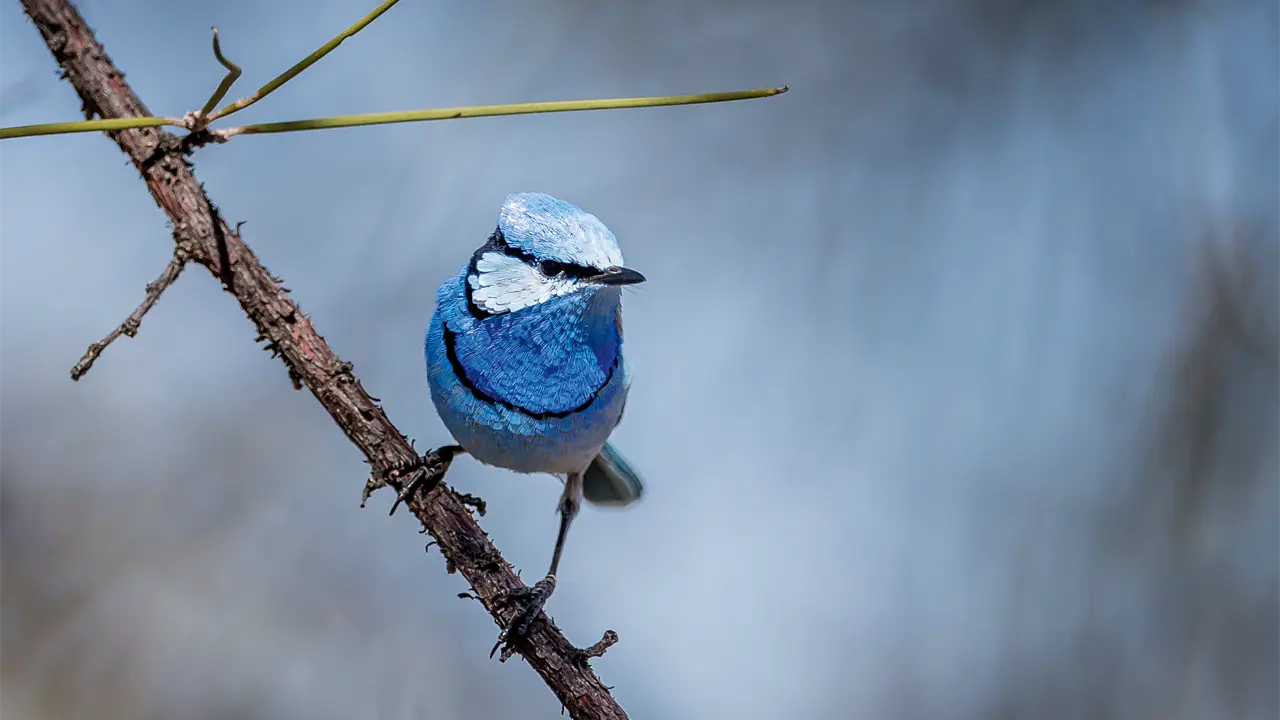
David went on to make birds his profession. He has co-authored a booklet on waders, prepared bird lists for the submission on the creation of the Bunurong Marine National Park on the Bass Strait coastline and has worked as a bird guide in the Kimberley and in the town of 1770 in Queensland. He has discovered nesting peregrine falcons and “was blown away to see both the black and blue variations of the white-winged fairywren in the same spot” near Exmouth in WA. You could ask him about the Arafura fantail, the painted finch or the rockwarbler, but you’d need another day.
With all that experience, David rates the little known Bulburin National Park highly. “Last October I had one of the best, if not the best, bird-watching days of my life,” he says. “Before the heat of summer when trees were heavy with fruit, we identified 77 species in just a few hours, including a regent bowerbird, topknot pigeons and rose-crowned fruit-doves.”
Bulburin may not yet be on the radar of many twitchers who gravitate to more renowned rainforests around Daintree or to Broome in WA for its migratory shorebirds or SA’s Gluepot Reserve, where arid birds such as the threatened black-eared miner and malleefowl are highly prized species. But rain events across the outback in 2025 generated an exceptional bird-breeding season and twitchers are on the move to spot some of the roughly 900 species that call Australia home.
“The rain has created a series of good seasons for not just our nomadic waterbirds but arid zone birds such as budgies, cockatiels and lesser-known species like flock bronzewings,” Sean Dooley from Birdlife Australia says. “We’ve seen amazing congregations of nesting waterbirds such as pelicans and banded stilts that gather at sites like Lake Eyre.”
This story excerpt is from issue #166
Outback Magazine: Apr/May 2026