
At the centre of Australia lies a vast landscape, carved by time, where elements from across the continent distill into light and salt.
Story + Photos Sam Thies
Kati Thanda-Lake Eyre rests below sea level and the imprint of an ancient ocean endures beneath the crust. Most years it remains silent, a vast plain of reflection without water. But every few decades, distant rains gather in the north and begin their slow passage through the desert’s veins. They carry with them silt, seed and life, flowing toward the continent’s lowest point, where all things eventually come to rest.
In 2025, I followed a similar path south-west, a personal pilgrimage drawn by the same gravity that guides the water. Through floodplain and desert, I travelled toward the memory of an inland sea. When I arrived, the lake had just begun to recede. Still immense and radiant, it stood between fullness and return.
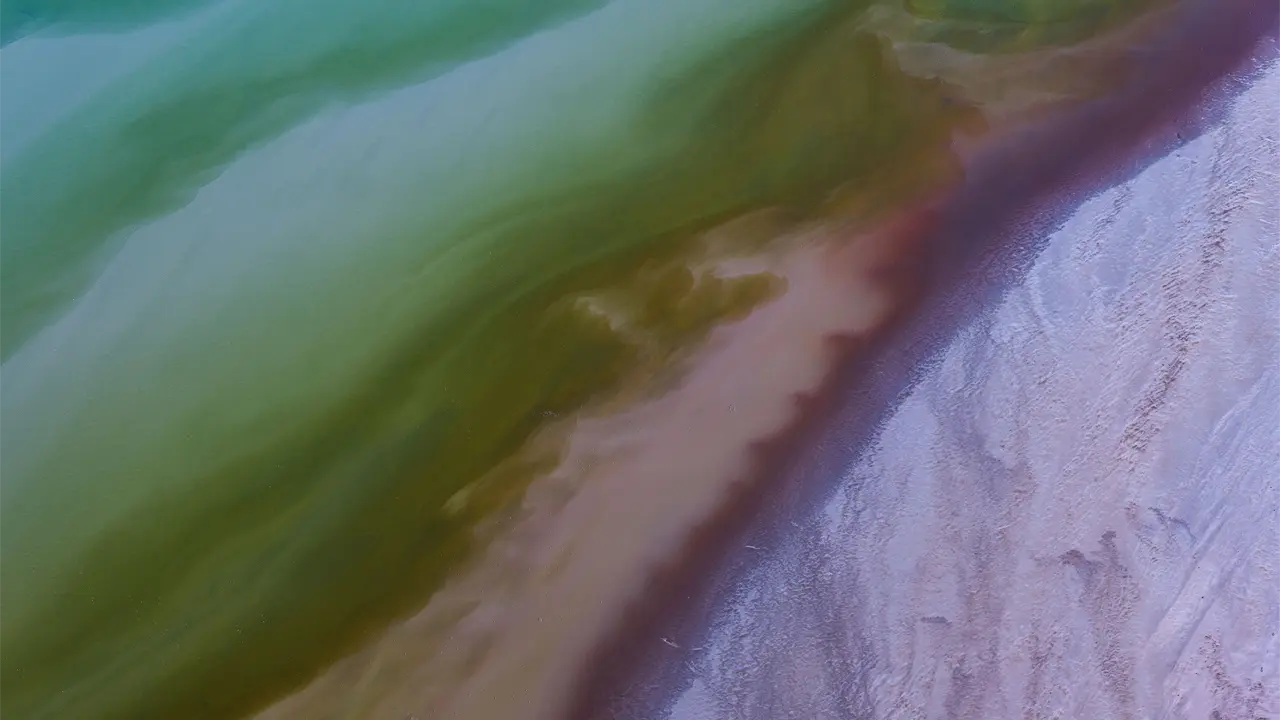
A thin skin of water moved across the basin like glass, filtering sunlight, layering itself over mineral crust, awakening dormant pigments – a liquid veil sweeping colour across the desert.
Beneath the shallows, hues emerged. Blue from water reflecting the sky, rose from algae, jade from gypsum, ochre and gold from mineral and sun.
I photographed the lake in that threshold, where water relinquished its hold and the desert began to reveal its design. These are not landscapes but documentations of transformation, the earth exposing its own architecture through pressure and time.
My images in the book Veil Obscura (captured from a light aircraft at approximately 2,500 feet above lake level) stand as a record of this rare alignment, the fullest Lake Eyre has been since 1974, and as an ode to the natural order that shapes such moments. The lake, the rivers and everything drawn to it are bound by the same law of return.
I was not yet born when the lake last reached this fullness, and may not be alive when it does again. All that is seen here will vanish again, absorbed by heat, erased by wind, settled back into silence.
Veil Obscura bears witness to that impermanence, to the truth that the earth’s greatest works are never finished, only revealed, briefly, in passing.
This story excerpt is from issue #166
Outback Magazine: Apr/May 2026