
A $4 million, multi-agency program is aiming to create a suite of new biological tools to fight one of Australia’s biggest feral threats.
Story Ken Eastwood Photo National Archives of Australia
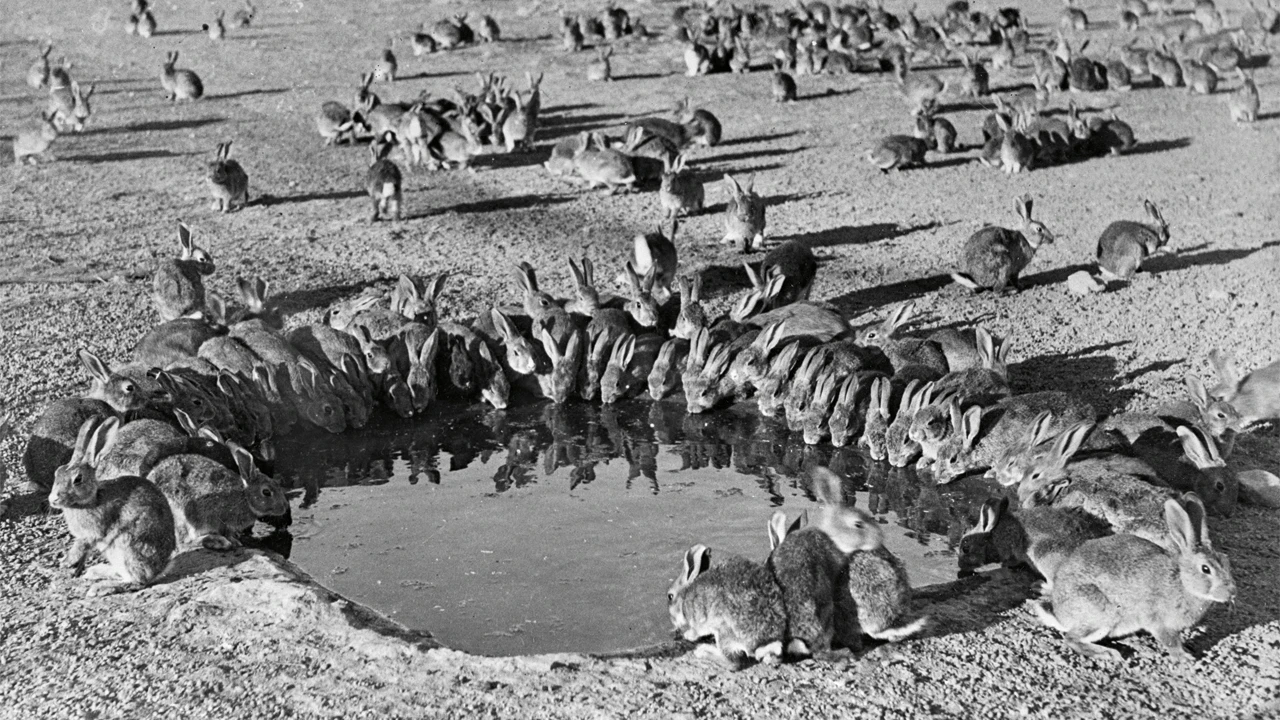
David Lord is worried. A fourth-generation grazier on 66,600ha Thackaringa station, near Broken Hill, NSW, he and his family have long fought rabbits. When calicivirus hit Thackaringa in 1995, an estimated 750,000 rabbits were killed in six weeks. But they came back, and in the early 2000s David was part of Australia’s largest warren-ripping program, taking out 22,000 warrens in the area, including 6,000 on his property.
In 2015, an overseas strain of calicivirus arrived in Australia by unknown means, and it also kept down numbers, killing about 60% of rabbits in some populations. A third strain called K5 was released in 2017.
But now David says the rabbits are coming back again. “Things are ok, but very, very gradually over years, those numbers increase,” he says. “I’ve probably seen 3–4 rabbits in the past six weeks. I get very concerned when I see a rabbit.”
Although warren ripping is still considered one of the most effective methods of keeping rabbit numbers down, David is hanging out for a new virus strain. “Given the vast area of Australia, another whole suite of biocontrols is the only answer,” he says. “The economics of ripping probably doesn’t stack up against biocontrol. It was the equivalent amount of money to buy the neighbours out as it was to rip our warrens.”
Rabbits are estimated to cost Australian agriculture around $200 million every year. Their fecundity and voracious appetites devastate pastoral and environmental landscapes.
This story excerpt is from Issue #169
Outback Magazine: Oct/Nov 2026