
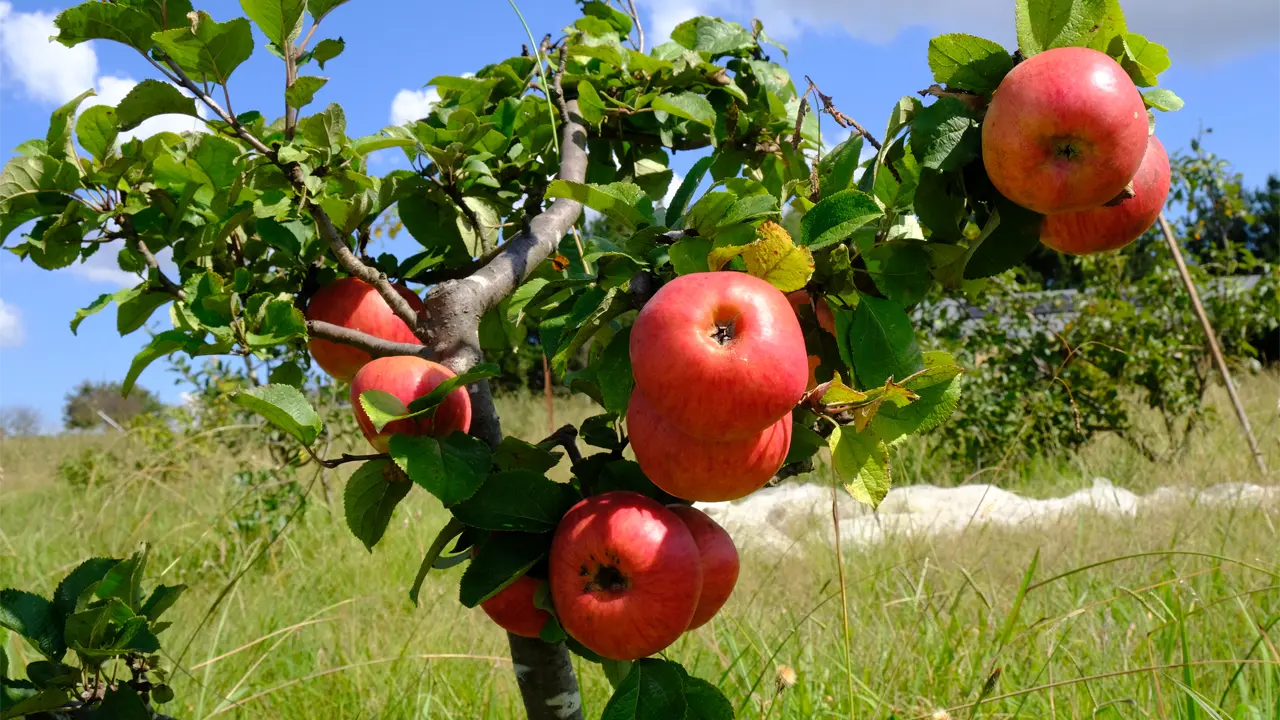
Vanishing in the 1930s, the sought-after Rymer apple variety has been found on a family orchard on the Southern Tablelands of NSW.
Story Robert Watkins Photo Gary Sully
Overlooking a valley long fleeced of its gold, three apple trees soak up the clement winter sun. Grey as phantoms, they contrast strongly with the evergreen Australian bush. They are sleeping now. In the spring, they will awaken once more. These horticultural veterans of the high country stand east of the Great Dividing Range, about halfway between Canberra and the coast.
Rudi Stachow has fond and vivid memories of growing up on the family apple farm here at Majors Creek, NSW. To Rudi, revisiting the orchard is personal, almost spiritual – a place for meditation and recollection. He spies a rusty old drum and excitedly draws it from the undergrowth. “This is from the sledge my mother used to spray the trees,” he says. “Hauled along the terraces by our old horse Major, she looked like a Valkyrie, pump in one hand and reins and spray hose in the other.”
In 2008, cider producer and history enthusiast Gary Sully and pomologist David Pickering joined Rudi for a stroll around the remnants of the family orchard. (Pomology is the branch of botany that studies the cultivation of fruits and nuts.) Rudi identified three trees as being, “Rymers planted by my father”.
Gary was captivated. “As apple pedigrees go, the Rymer is royalty, an ancestor to some of Britain’s most illustrious culinary apples, including the much-loved Bramley’s seedling,” he says.
This story excerpt is from issue #166
Outback Magazine: Apr/May 2026