
Some 6,000 businesses are now involved in on- or off-farm tourism, often turning adversity into advantage.
Story Kirsty McKenzie Photos Ken Brass
The final blow for Fiona Ferguson and her husband Adam Murray came in 2022, when two mini tornadoes knocked the roof off the shearers’ quarters and sent three water tanks and half the shearing shed flying down the flat. Then an accompanying lightning strike killed 40 rams.
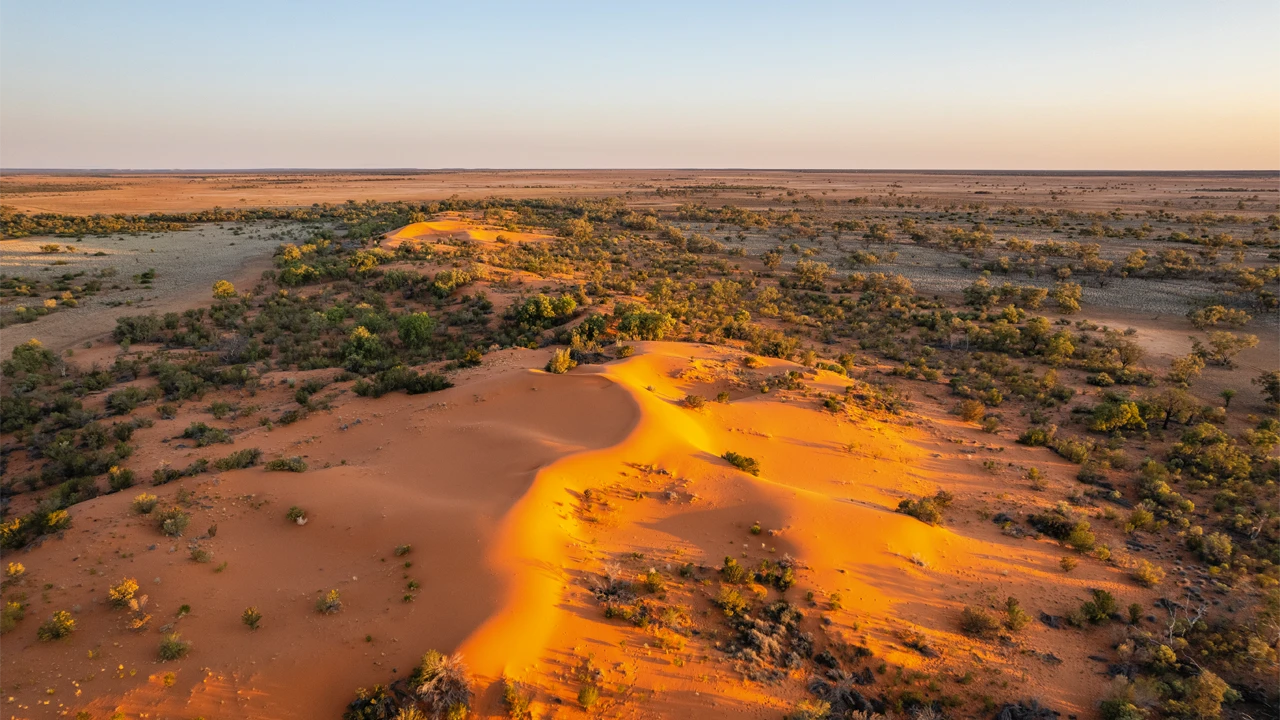
Fiona and Adam live on the 52,600ha Belombre station, midway between Eromanga and Quilpie in south-western Queensland. They run 500–600 Droughtmaster cattle and, in a good season, about 8,000 Merinos. As a result of last year’s floods, when they lost 2,000 sheep, their current flock is about 6,000.
“We’d talked about farmstay previously, because there is limited accommodation available in Eromanga [population 40-odd] for visitors to the Natural History Museum,” Fiona recalls. “Adam hadn’t been keen, because he already had his hands full running the station, but after the second violent storm in as many weeks he came home and said, ‘We’re never going to get ahead unless we diversify’.”
After repairing the shearing shed and quarters, Adam and Fiona were able to use some of the insurance money to convert two former railway workers’ camps to 16 studio units, as well as two former mobile dental vans into cabins for guides and bus drivers, calling the development Toogunna Plains Farmstay. “We recycled as much of the corrugated iron from the shearers’ quarters as was possible and then used the old timber to make bedheads, tea and coffee areas, and bathroom benches,” Fiona says. “We opened for business in April 2024, with seven coach bookings for the season. That became 17 when the buses couldn’t get to Cameron Corner due to wet weather. This year we welcomed 60 groups and we have 80 booked for next year.”
Fiona and Adam are part of the growing agritourism sector that’s becoming a significant part of Australia’s visitor and regional economies. It turns farms, produce and landscapes into visitor experiences that diversify income, support local jobs and strengthen community resilience, especially in the regions.
This story excerpt is from Issue #169
Outback Magazine: Oct/Nov 2026