
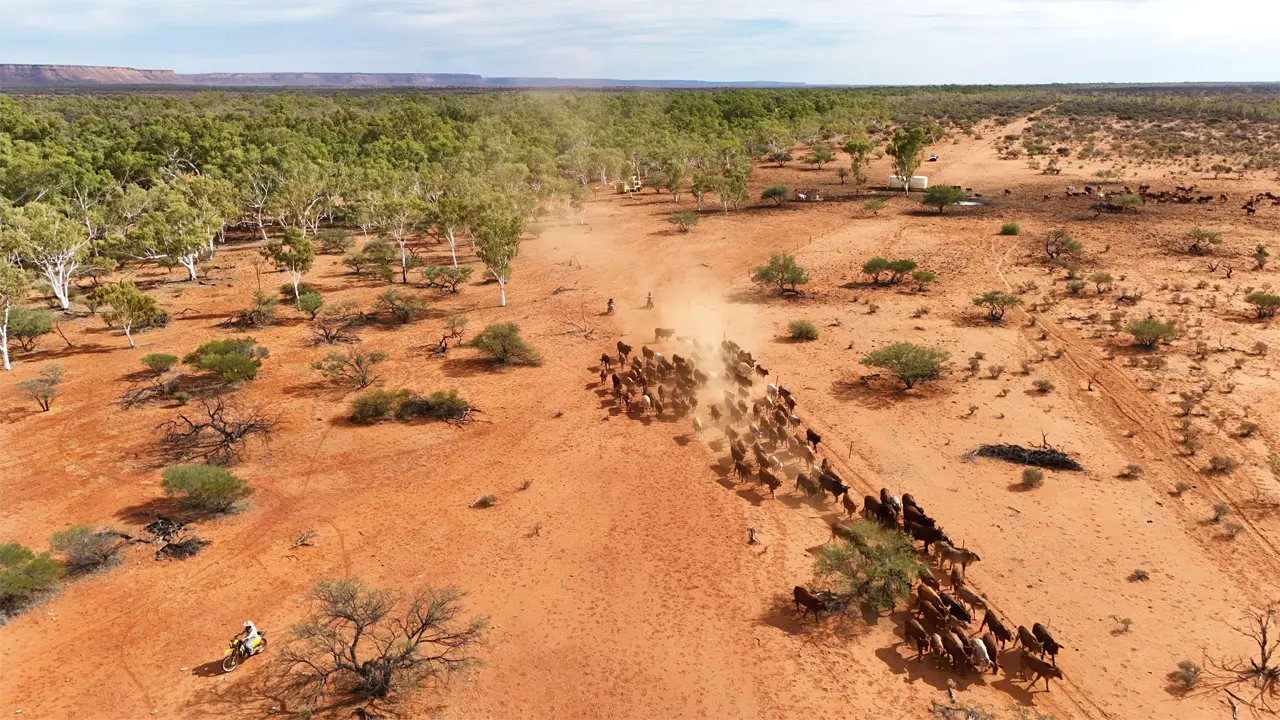
With thriving horticulture and pastoralism industries, and 2.4 million tourist visitor nights a year, the Gascoyne region is an often forgotten powerhouse.
Story + Photos Ken Eastwood
Freshly bought Droughtmaster bulls are in the yard, a road train of hay is being unloaded, and a constant stream of tourists in campervans, caravan-towing 4WDs and sedans are kicking up dust along Bullara station’s driveway. Like almost every night from April to October, up to 450 tourists will be staying here tonight in campsites, renovated and modernised shearer’s quarters, standalone cottages and glamping tents, even though Bullara station is sort of in the middle of nowhere. It isn’t right on the beautiful Gascoyne coastline renowned for great fishing or in either of the World Heritage areas that attract so many to the region; it’s over 1,100km north of Perth,
3 hours’ drive from the rich horticultural region around Carnarvon and it isn’t near the Gascoyne’s geological marvel of Mt Augustus. But since 2010, Bullara owners Edwina and Tim Shallcross have built up this tourism operation so well that it now provides about 50% of their income.
Centred around the old woolshed – which is a busy bar and high quality restaurant by night, and a cafe by day that people make 180km round trips from Exmouth to visit just to eat the plump scones – the tourism facilities are well thought out, quirky and immaculately presented, with facilities such as the open-to-the-sky showers becoming hits on social media. Bullara’s reputation has spread, both for visitors and staff – with over 500 applicants for the 30 positions this year. “We’re booked out for July and August – it’s pretty much chockers,” Edwina says.
Bullara’s transition from the home of peoples such as the Wajarri, to a Merino station established in 1920, to Damara sheep 20 years ago, then a cattle-only property (with a short foray into horticulture) and now tourism, is a common story across the 135,000sq km of the Gascoyne. Although it was once a very strong sheep area, all but a handful of the Gascoyne’s 67 pastoral operations moved away from sheep in the 1980s and ’90s, initially because of plummeting wool prices, and then due to the growing impact of wild dogs. Bullara’s lambing rates, for example, fell from 113% to 25% in the 2 years before they gave up on sheep in 2010. “We went from never seeing a dog to seeing a dog every mill run,” Tim says. “Getting out of sheep was the best thing that happened to me.”
Listen: Tim Bray, the CEO of the Gascoyne Development Commission unpacks this often overlooked but surprising region of Western Australia on the OUTBACK podcast.
This story excerpt is from issue #162
Outback Magazine: Aug/Sep 2025