

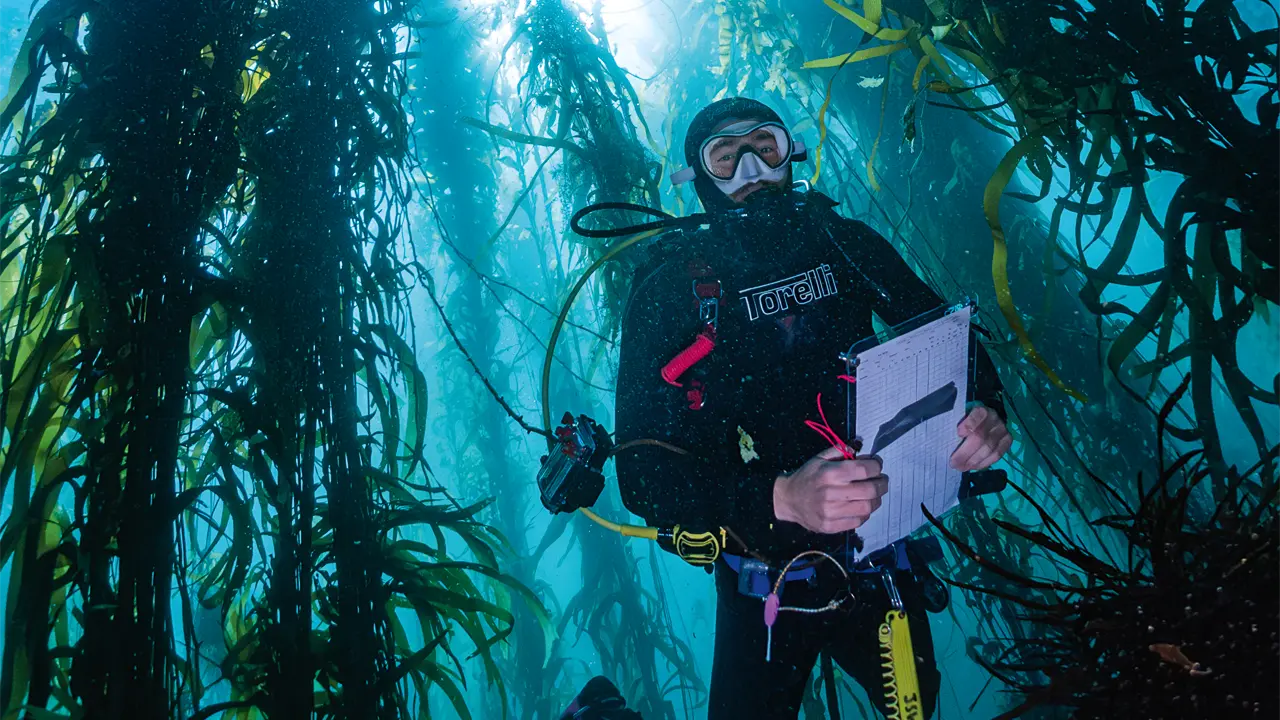
A $3.5 million project aims to regrow Tasmania’s giant kelp forests.
Story Kate Newsome Photo Scott Ling
Diving among Tasmania’s giant kelp is like flying through a rainforest. In ideal conditions, this seaweed can grow half a metre each day, unfurling through cold, nutrient-rich waters toward the surface and stretching up to 10 storeys tall.
In temperate areas around the globe, giant kelp forms forests along coastlines, providing sustenance and shelter for a greater diversity of life than almost any other marine community. And although the giant kelp itself isn’t endangered, the ecological communities it forms are on the precipice of extinction. On Tasmania’s east coast, it’s estimated that 95% of the giant kelp forests are gone. It is an ecological and economic imperative to restore these underwater forests because of their role in nurturing marine biodiversity and bolstering reef fisheries.
In a $3.5 million Tasmanian Giant Kelp Restoration Project running since 2024, researchers have been focused on 18 sites on Tasmania’s coastline, eight of which are surviving giant kelp forests. The project has been funded through the Federal Government’s Saving Native Species Program in collaboration with commercial, community and research groups, including the Nature Conservancy, Sea Forest and the University of Tasmania. It’s the result of decades of research, finding ways to seed forests from scratch and safeguard what’s left: a feat nothing short of “rebuilding a cathedral”, says Professor Scott Ling of the university’s Institute for Marine and Antarctic Studies (IMAS).
This story excerpt is from issue #166
Outback Magazine: Apr/May 2026