
With emissions targets back in the spotlight, can carbon farming – and markets – really offer a win-win for Australian agriculture?
Story Kate Newsome Photo LOAM Bio
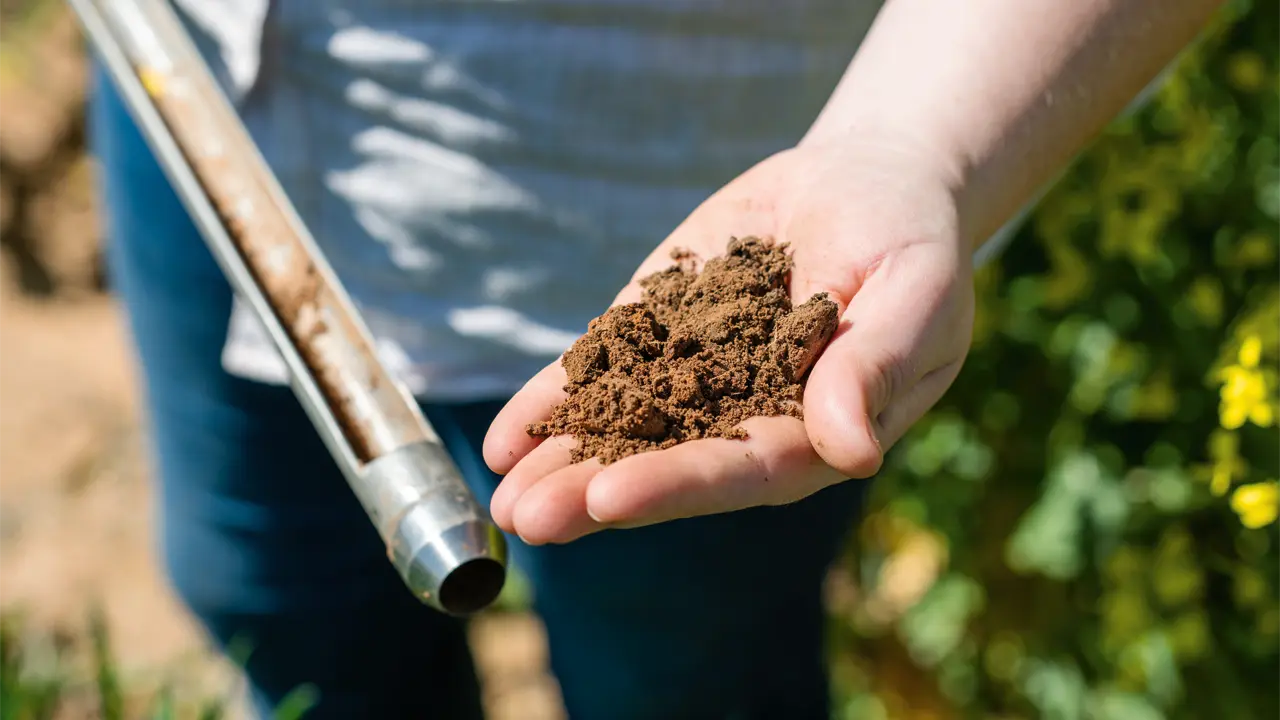
Beneath your feet is a subterranean world. In a teaspoon of topsoil, there’s a mass of plant and animal matter, billions of living microbes. This ‘soil organic matter’ is the foundation of flourishing agriculture. It mostly consists of carbon, which – alongside water and nutrients – is just one currency cycling through the tangle of roots and earth in exchanges of supply and demand.
In 2019, Hamish and Jess Webb had tests done on Myanbah, their newly acquired sheep and cattle property near Uralla, NSW. With the help of Precision Pastures founder Milton Curkpatrick, they diagnosed major soil health issues. Milton recommended several ways to remedy the pastures: to add nutrients, seed, balance acidity levels, and adjust stocking rates and grazing management. “By the way,” Milton advised, “each of these activities is an ‘eligible activity’ that can generate carbon credits, which are tradeable in the carbon market.”
“He may as well’ve been speaking French,” is how Hamish – then a self-described “carbon sceptic” – recalls it. “But I promised I would look into it a bit more.”
Through photosynthesis, carbon can be pulled out of the atmosphere and ‘sequestered’ into the landscape. That’s carbon farming. And like any other crop, carbon can be quantified and sold. For every tonne of carbon dioxide equivalent (CO2-e) that’s sequestered or avoided, it’s possible to be issued an Australian Carbon Credit Unit (ACCU), typically holding a value of $30–$40.
This story excerpt is from issue #163
Outback Magazine: Oct/Nov 2025