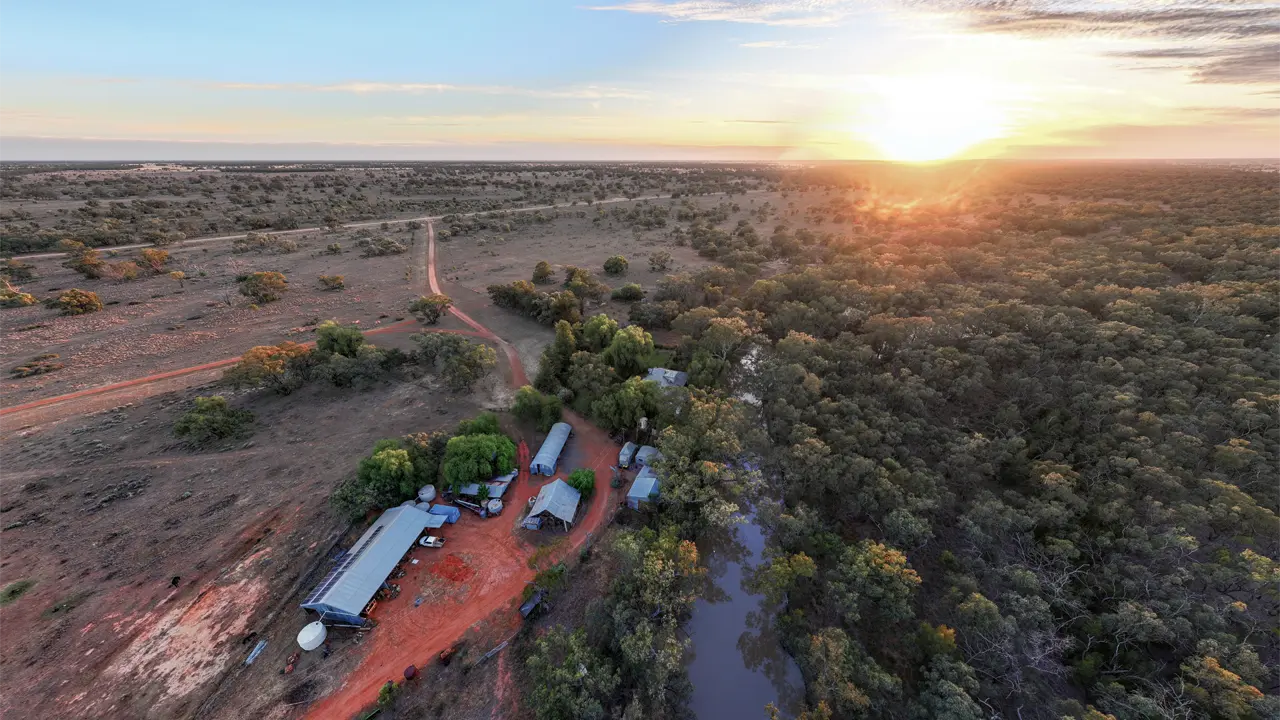


The Kim Jackson scholarship supports rural women studying engineering at ANU.
Story Ken Eastwood Photo Skip Foundation
Thanks to a scholarship worth $125,000, Victoria Bragg, of Crowther, NSW, is now studying engineering at the Australian National University (ANU). A recipient of the Kim Jackson scholarship, Victoria will receive $25,000 per year for the next 5 years to contribute towards her tuition and accommodation while she completes a Bachelor of Engineering and a Bachelor of Science.
“It definitely takes the pressure off,” Victoria says. “Mum’s supporting my sister already at university and so I probably would have had to take a gap year.”
Victoria’s family runs a 3,240ha sheep and cattle property at Crowther, near Young, but she has been attracted to engineering for some time, particularly developing sustainable energy solutions for rural communities. “I always loved science and engineering and was thinking about being a vet, but I thought I could make more of an impact with solving rural problems through engineering.” Although the start of the engineering degree is general, she can begin specialising in renewable energy systems from third year.
Within a few weeks of starting the degree, Victoria was involved in programming rover robots. “They really throw you in the deep end. It definitely takes a bit of adjustment.”
Set up in 2021, the scholarship is administered by the Skip Foundation, cofounded by Kim Jackson, who funds the award. It is targeted at young women from non-metropolitan areas who want to study engineering at ANU.
Kim was from regional Queensland and in the early 2000s she received a scholarship to study Engineering and Commerce at ANU and has since worked in male-dominated fields, including investment banking and funds management. “In engineering, women make up just 16% of university graduates and constitute only 13% of the engineering workforce, despite the sector being the largest employer of all STEM professions,” Kim says. “In Australia, women represent just 15% of all people working in STEM jobs. This underrepresentation begins in school, where girls consistently select less STEM subjects and continues in university.”
This story excerpt is from Issue #161
Outback Magazine: June/July 2025