
As mining finishes up in north-eastern Arnhem Land, communities are seeking new paths to a sustainable, prosperous future.
Story Kirsty McKenzie Photos Ken Brass
Michael Yunupingu uses the analogy of walking through mangroves to reach the saltwater to describe his people’s hopes for transitioning their community to an independent, prosperous and sustainable future. “You can vividly see the sea [the destination] through the mangroves, which are the challenges,” he says. “It’s a journey of ups and downs, changing directions and being stuck in the mud. But I am confident we will get there.”
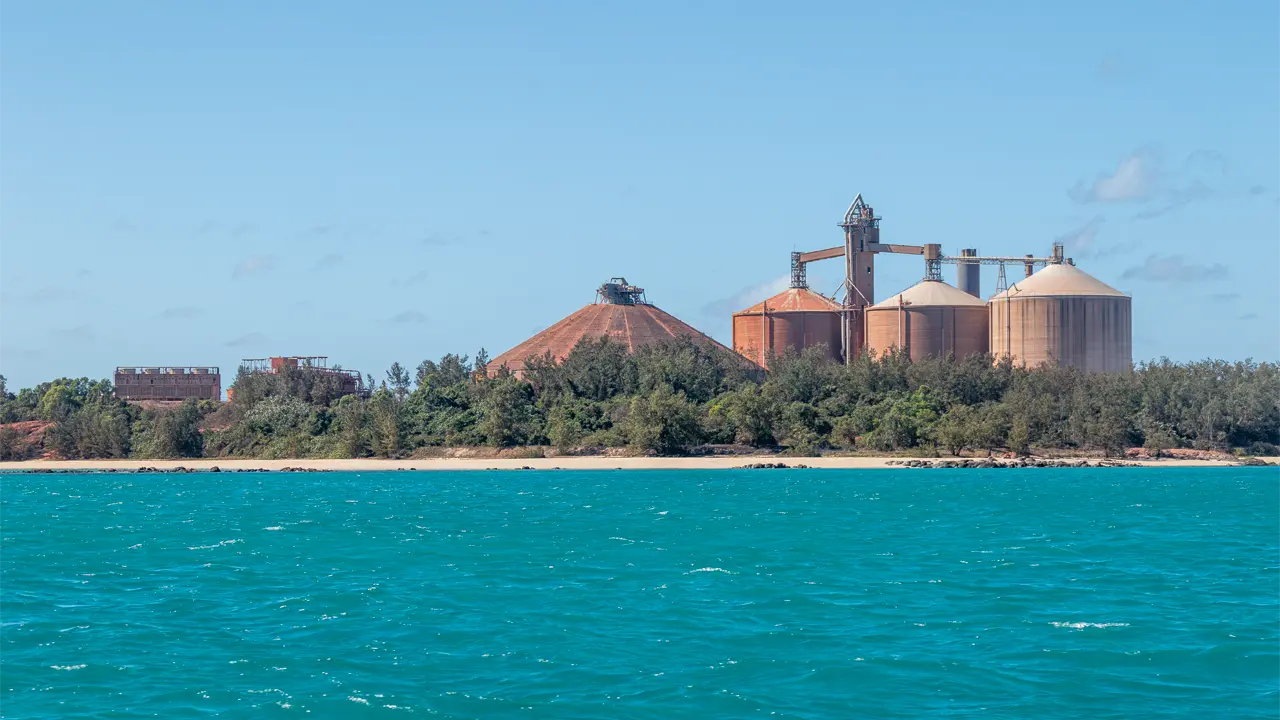
Michael is the operations coordinator for the Gumatj Corporation, a 100% Indigenous owned business founded in 2007 to empower his people – the Gumatj – one of 13 clans of the Yolŋu nation, who have lived in north-eastern Arnhem Land for at least 60,000 years. The clock is ticking for Michael’s 350-strong community, who live in the township of Gunyangara on the Drimmie Peninsula, the 3,500 odd people of the mining town of Nhulunbuy 15km to the east, the 1,000 people of the Yirrkala community further south and an indeterminate number of people who are scattered across remote homelands in the region. With the closure of Rio Tinto’s Gove alumina refinery in 2014 and the end of bauxite mining on the Gove Peninsula by 2029, the community that has relied on mining for almost 60 years has to find other ways to survive.
You don’t have to spend long in Nhulunbuy to hear concerned conversations about the impact the anticipated loss of about half of the town’s population will have on services. From the size of the school, the reduction of hospital and medical services, and the downgrading of the airport and the shipping port to the rumour that a big chain supermarket won’t renew its lease, the big question is: how will the region survive a future without mining?
This story excerpt is from issue #165
Outback Magazine: Feb/Mar 2026