
Decades of experience and hard-won skills are brought to bear when Lindsay Ward is bullcatching.
Story + Photos Fiona Lake
Old-school coacher mustering is relatively simple with educated cattle in tractable country. It is significantly more difficult when catching and keeping cattle that’ve learnt every escape trick in the book, in country that is as rough as it gets.
The challenge begins with repeatedly bringing escapees back to the mob put together by the choppers, until most decide it is the safest place to be. Serial offenders are introduced to the bullcatcher and their horns tipped, before being gifted a truck ride direct to the distant drafting yards. The ‘coachers’ are then walked towards where the choppers are finding more cattle and halted for a few minutes or hours, until newcomers are introduced. Just before new cattle are chased in, people hide on the opposite side of the growing mob, to avoid baulking them and to stop any that try to blow right through and out the other side.
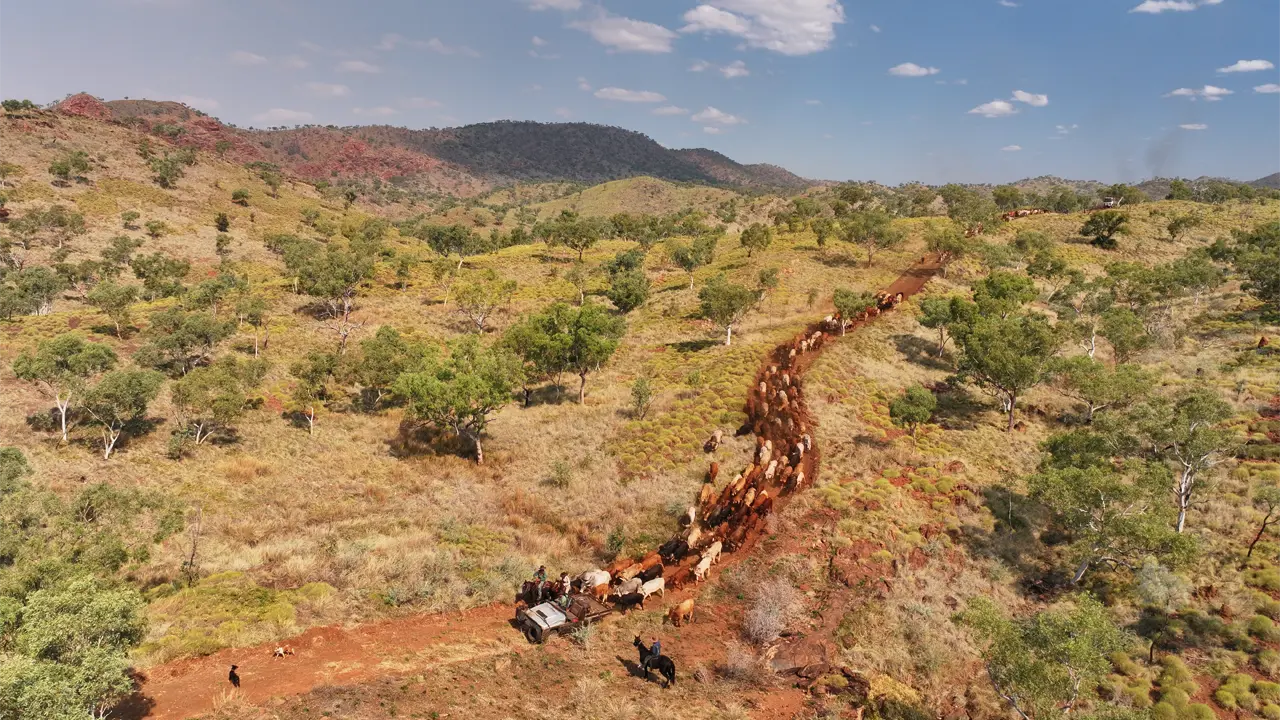
Most of these cattle are wild – they’ve never smelled or seen people up close. When the newcomers have cooled down, the mob moves on, preferably on a graded track as cattle prefer it to getting sore-footed on the rocks either side. Being mostly Brahmans, they’re taught to follow a horse or bullcatcher and eventually they’ll do so with zeal, pushing to stride out and go wherever the lead takes them. Once they’ve walked tens of kilometres, their orderly lines make them look like cattle familiar with people since birth – an impression contradicted by the impressive collection of horns instead of brands, tags and earmarks.
Lindsay always orchestrates as comprehensive a muster as humanly possible – he wants to get every beast he can. His decades of cattle and country knowledge fold into the work, combined with outstanding persistence. Every daylight hour for days on end is utilised, until the final mob reaches permanent drafting yards. It involves incessant problem-solving, with a view to maintaining machine and horse usability and adjusting to the best catching, water, grass and portable yard locations before each 5pm sunset.
Not scrimping on people is key. The operation usually entails two choppers, bullcatchers and quad bikes, plus one 2-wheeler. There are generally six people on horses, plus someone swapping between driving the bull pick-up truck and the Mack carrying portable panels. Solid teamwork is vital and the need for constant vigilance is often reiterated. Everyone must identify which cattle are just waiting for a chance to depart and if one person leaves the mob to return an escapee or help a pilot add new cattle, others must instantly move around to block gaps. A brief attention-lapse could cause someone serious injury or the loss of hard-fought-for cattle.
This story excerpt is from issue #163
Outback Magazine: Oct/Nov 2025